Level: Diploma
Duration: 3 Years
Mode of Study: On-Campus
Tuition Fee: USD 200 per semester
Location: Eden Village, Juba, South Sudan
Overview
The Diploma in Medical Laboratory Technology is a three-year programme designed to equip students with the knowledge, practical skills, and technical competencies required to perform accurate diagnostic tests, operate modern laboratory equipment, and support clinical decision-making. The programme combines classroom learning, hands-on laboratory training, and supervised clinical laboratory attachments, preparing graduates to work in hospitals, diagnostic centres, public health laboratories, and research institutions.
Programme Objectives
The programme will prepare students to:
- Collect, process, and analyze clinical specimens safely and accurately.
- Perform routine and specialized diagnostic tests across key laboratory disciplines.
- Operate, calibrate, and maintain laboratory instrumentation and diagnostic equipment.
- Implement strict laboratory safety protocols, biosafety, and infection control measures.
- Apply Quality Control (QC) and Quality Assurance (QA) standards to ensure accurate test results.
- Interpret and report laboratory results accurately to assist medical practitioners in diagnosis and treatment.
- Work effectively as part of a multidisciplinary healthcare team.
- Maintain high professional, ethical, and legal standards in medical laboratory practice.
- Apply evidence-based knowledge and modern methodologies in diagnostic testing.
- Participate in public health surveillance, disease outbreak investigations, and epidemiological monitoring.
Programme Structure
The programme will be completed over three academic years consisting of six semesters.
Students will undertake:
- Classroom-based theoretical learning
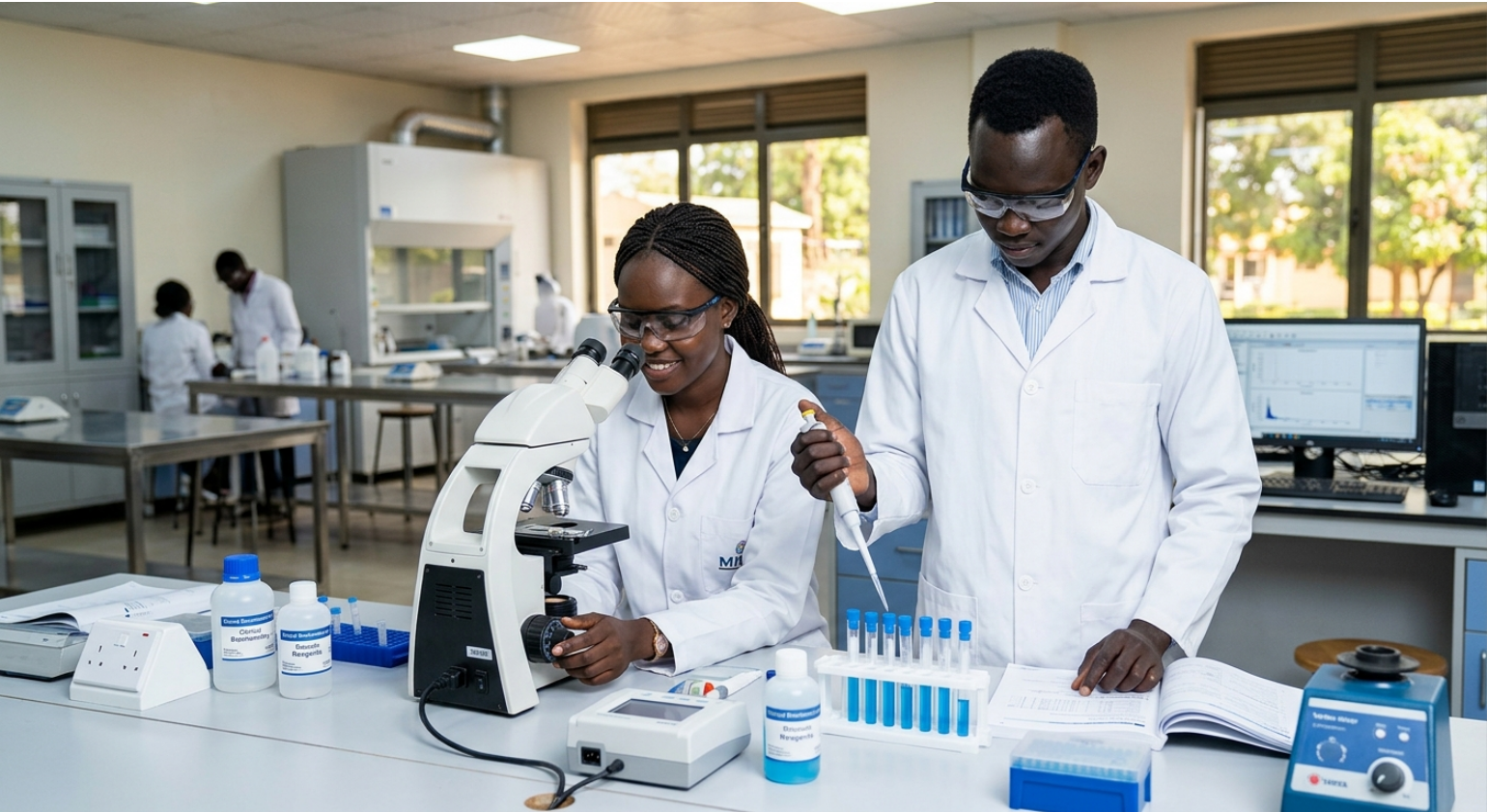
- Hands-on practical laboratory training
- Skills-based learning in simulation labs
- Supervised clinical laboratory attachments
- Quality control and biosafety workshops
- Practical diagnostic placements in accredited health facilities
The combination of theoretical knowledge and extensive practical laboratory training will enable students to progressively develop the technical competencies required for professional medical laboratory practice.
Areas of Learning
Students will receive training in key areas of medical laboratory science and healthcare, including:
- Anatomy and Physiology
- Fundamentals of Medical Laboratory Technology
- Clinical Biochemistry
- Haematology and Blood Transfusion Science (Immunohaematology)
- Medical Microbiology (Bacteriology, Virology, and Mycology)
- Medical Parasitology and Entomology
- Histopathology and Cytology
- Clinical Immunology and Serology
- Laboratory Safety, Biosafety, and Waste Management
- Quality Assurance and Laboratory Management
- Pharmacology and Toxicology Basics
- Research Methodology and Biostatistics
- Professional Ethics and Laboratory Law
Clinical Training
Practical clinical attachment forms a critical component of the programme. Students will have direct opportunities to apply classroom knowledge in real-world clinical laboratories and hospital diagnostic departments under the supervision of experienced laboratory professionals.
Clinical training will help students build mastery in specimen management, diagnostic procedures, equipment troubleshooting, biosafety compliance, quality assurance, laboratory data management, and ethical patient interaction.
Entry Requirements
Applicants must meet the admission requirements of Meridian Institute of Health Sciences (MIHS) and the applicable requirements of the relevant education and health regulatory authorities in South Sudan.
Applicants will be required to submit their academic certificates (with strong performance in science subjects, including Biology, Chemistry, Physics, and Mathematics) and other supporting documents requested by MIHS during the admission process.
Applicants are encouraged to contact the MIHS Admissions Office for current admission requirements before submitting their application.
Why Study Medical Laboratory at MIHS?
Studying Medical Laboratory Technology at MIHS will provide students with:
- On-campus theoretical and practical learning
- Well-equipped hands-on laboratory training facilities
- Supervised clinical experience in active health facilities
- Qualified and experienced teaching faculty
- A structured three-year diploma curriculum
- Comprehensive training across all major diagnostic disciplines
- A learning environment focused on technical precision, professional development, and career readiness
Application
Apply for the Diploma in Medical Laboratory
Ready to begin your career in diagnostic medicine and health sciences?
Apply to Meridian Institute of Health Sciences (MIHS) today.
How to Apply
- Complete the MIHS application form.
- Submit the required academic and supporting documents.
- Wait for application review and admission confirmation.
- Complete the required registration and fee payment.
- Begin your studies at MIHS.
Start Your Application Today
- Apply Online: Complete the MIHS online application form through the official admissions portal.
- Need assistance? Contact the MIHS Admissions Office for information about admission requirements, application procedures, fees, registration, and the programme.
Take the first step toward a vital career in diagnostic healthcare. Apply to Meridian Institute of Health Sciences today.
Eligibility
Applicants must meet the admission requirements of Meridian Institute of Health Sciences (MIHS) and the applicable requirements of the relevant education and health regulatory authorities in South Sudan.
Applicants will be required to submit their academic certificates (with strong performance in science subjects, including Biology, Chemistry, Physics, and Mathematics) and other supporting documents requested by MIHS during the admission process.
Applicants are encouraged to contact the MIHS Admissions Office for current admission requirements before submitting their application.
Career Paths
- Public and private hospital laboratories
- Primary healthcare centres and polyclinics
- Independent diagnostic and reference laboratories
- Blood transfusion services and blood banks
- Public health and epidemiological laboratories
- Non-governmental organisations (NGOs)
- Humanitarian health and emergency relief programmes
- Pharmaceutical and medical research facilities
- Disease control and surveillance agencies
Curriculum
Semester 1
- Anatomy and Physiology I (Cell biology, musculoskeletal, cardiovascular, and respiratory systems)
- Fundamentals of Medical Laboratory Technology & Safety (Intro to medical lab science, glasswares, instrumentation, and biosafety protocols)
- General & Clinical Biochemistry I (Basic chemical principles, laboratory math, solution preparations, and pH dynamics)
- Communication Skills & Computer Applications (Medical terminology, reporting, and healthcare IT)
- First Aid, Infection Prevention, and Control
Semester 2
- Anatomy and Physiology II (Renal, digestive, endocrine, reproductive, and nervous systems)
- General & Clinical Biochemistry II (Carbohydrate, lipid, and protein metabolism and testing)
- Basic Medical Microbiology (Introduction to bacteriology, sterilization, and culture techniques)
- Basic Haematology (Blood cells, haemoglobin estimation, and routine blood counts)
- Practical Laboratory Skills Training I (Hands-on bench skill rotations)
Semester 3
- Systematic Bacteriology & Mycology (Identification, isolation, and antibiotic susceptibility testing)
- Diagnostic Haematology & Haemostasis (Anemias, blood cell morphology, and coagulation disorders)
- Medical Parasitology and Entomology (Intestinal, blood, and tissue parasites common in East/Central Africa)
- Clinical Immunology and Serology (Antigen-antibody reactions, serological testing, and rapid diagnostic tools)
- Pharmacology and Toxicology Basics (Drug classes, mechanisms, and toxicology screenings)
Semester 4
- Blood Transfusion Science (Immunohaematology) (Blood grouping, cross-matching, donor screening, and storage)
- Medical Virology (Viral infections, hepatitis, HIV diagnostics, and molecular techniques intro)
- Histopathology and Cytology Techniques (Tissue processing, sectioning, staining, and cellular exams)
- Quality Assurance and Laboratory Management (Quality control protocols, calibration, and lab logistics)
- Practical Laboratory Skills Training II (Intermediate multi-departmental bench rotations)
Semester 5
- Advanced Clinical Chemistry (Organ function tests: liver, renal, cardiac markers, and endocrinology)
- Advanced Medical Microbiology & Public Health (Epidemiology, disease outbreak investigation, and water/food analysis)
- Research Methodology and Biostatistics (Study design, data collection, and statistical analysis in diagnostics)
- Professional Ethics and Laboratory Law (Regulatory frameworks, patient confidentiality, and legal duties in South Sudan)
- Supervised Clinical Attachment I (Departmental rotations in accredited hospital laboratories)
Semester 6
- Comprehensive Clinical Laboratory Attachment II (Full-time practical immersion in diagnostic departments: Haematology, Microbiology, Biochemistry, Histopathology, and Blood Bank)
- Research Project / Case Study Presentation (Field research or analytical project in medical laboratory science)
- Comprehensive Practical Board Examinations (Exit skills assessment and mock professional licensing prep)
Fees
Tuition Fee: USD 200 per semester The tuition fee covers the programme's academic instruction. Any additional institutional, examination, practical laboratory materials, clinical attachment, registration, or other applicable fees will be communicated to students during the admission process.