
Programme: Diploma in Midwifery
Course Code: DMW
Duration: 3 Years
Mode: On-Campus
Tuition: USD 200 per semester
Location: Eden Village, Juba, South Sudan
Overview
The Diploma in Midwifery is a three-year programme designed to equip students with the knowledge, practical skills, and professional competencies required to provide safe, respectful, and quality care to women, newborns, and families.
The programme combines theoretical learning, practical skills training, clinical practice, and community-based learning. It prepares students to provide comprehensive maternal, newborn, sexual and reproductive health services in hospitals, health centres, clinics, communities, and other healthcare settings.
Programme Objectives
The programme will prepare students to:
- Provide safe and competent midwifery care.
- Promote sexual and reproductive health and rights.
- Provide antenatal, intrapartum, postnatal, and newborn care.
- Identify and appropriately manage or refer high-risk pregnancies and complications.
- Provide respectful, culturally sensitive, and gender-responsive care.
- Support women and families throughout pregnancy, childbirth, and the postnatal period.
- Recognize life-threatening conditions early and take appropriate action.
- Promote maternal and newborn health in communities.
- Work effectively with other healthcare professionals.
- Provide health education and counselling to women, families, and communities.
- Maintain accurate clinical records and documentation.
- Apply evidence-based practice and participate in research.
- Develop professional leadership and management skills.
Skills and Competencies
After completing the programme, graduates will be able to:
- Assess and monitor pregnant women.
- Provide comprehensive antenatal care.
- Develop appropriate care plans.
- Monitor women during labour and childbirth.
- Monitor maternal and fetal wellbeing during labour.
- Provide postnatal care.
- Provide essential newborn care.
- Identify and appropriately refer high-risk pregnancies.
- Recognize complications during pregnancy, labour, and the postpartum period.
- Administer medications and treatments within their professional scope.
- Provide health education and counselling.
- Support women and families experiencing pregnancy loss and other adverse outcomes.
- Promote breastfeeding and appropriate newborn care.
- Maintain accurate clinical records.
- Participate in community maternal and child health programmes.
- Work collaboratively within multidisciplinary healthcare teams.
Programme Structure
The programme will be completed over three academic years consisting of six semesters.
The programme will combine:
- Classroom-based theoretical learning
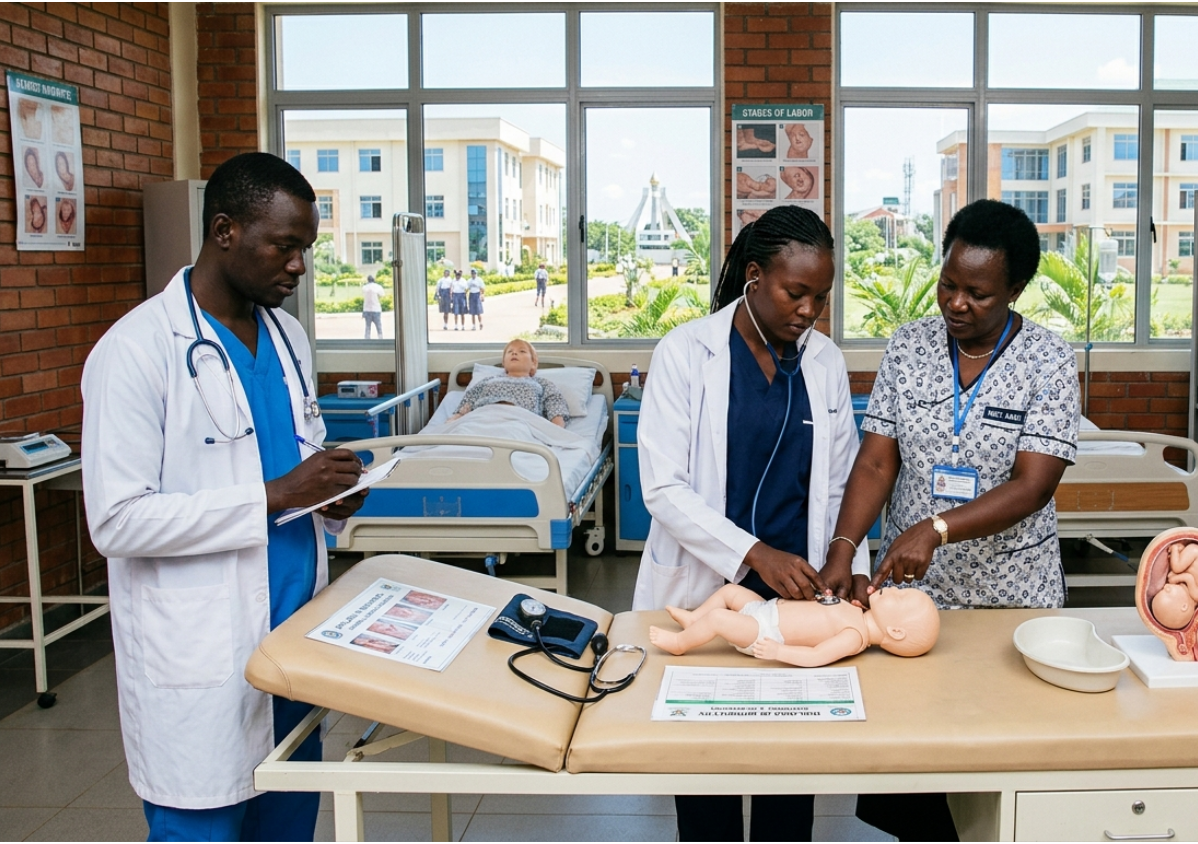
- Midwifery skills training
- Clinical practice
- Maternal and newborn health training
- Community-based learning
- Research and evidence-based practice
- Professional ethics and communication
Students will progressively develop their competencies through supervised practical and clinical experiences.
Key Areas of Study
Students will study key areas including
- Foundations of Midwifery Practice
- Anatomy and Physiology
- Normal Pregnancy and Childbirth
- Normal Postpartum and Newborn Care
- Complications of Pregnancy
- Complications of Labour and Delivery
- Neonatal Complications
- Sexual and Reproductive Health and Rights
- Gynecology
- Pharmacology
- Child Health
- Community Midwifery
- Primary Health Care
- Nutrition in Midwifery
- Communicable Diseases
- Epidemiology
- Microbiology
- Psychology and Sociology
- Research Methods
- Leadership and Management
- Communication and Information Technology
Clinical and Community Training
Clinical training will form an important component of the programme. Students will have supervised opportunities to apply their theoretical knowledge and practical skills in appropriate healthcare settings.
Students will gain practical experience in antenatal care, labour and delivery, postnatal care, newborn care, maternal and child health, reproductive health, and community-based services.
Community training will also help students understand the health needs of women and families and participate in health promotion and disease prevention activities.
Why Study Midwifery at MIHS?
Students will benefit from:
- On-campus learning
- Practical midwifery skills training
- Supervised clinical experience
- Community-based learning
- Qualified teaching staff
- A structured three-year diploma programme
- Training in maternal, newborn, and reproductive health
Preparation for professional midwifery practice
How to Apply:
- Complete the MIHS application form.
- Submit the required academic and supporting documents.
- Allow MIHS to review your application.
- Receive your admission decision and complete registration.
- Pay the required fees and begin your studies.
Eligibility
Applicants must meet the admission requirements of Meridian Institute of Health Sciences (MIHS) and the applicable requirements of the relevant education and health regulatory authorities in South Sudan.
Applicants will be required to submit their academic certificates and other supporting documents specified by MIHS during the admission process.
Career Paths
- Hospitals
- Maternity units
- Primary healthcare centres
- Health centres and clinics
- Maternal and child health programmes
- Community health programmes
- Non-governmental organisations
- Humanitarian health programmes
- Private healthcare facilities
- Public health and reproductive health programmes
Curriculum
Semester 1:
- Anatomy and Physiology
- Foundations of Midwifery Practice
- Microbiology
- Psychology and Sociology
- Communication and Information Technology
Semester 2:
- Normal Pregnancy and Childbirth
- Normal Postpartum and Newborn Care
- Pharmacology
- Nutrition in Midwifery
- Primary Health Care
Semester 3:
- Complications of Pregnancy
- Complications of Labour and Delivery
- Neonatal Complications
- Communicable Diseases
Semester 4:
- Gynecology
- Sexual and Reproductive Health and Rights
- Child Health
- Epidemiology
Semester 5:
- Community Midwifery
- Research Methods
- Supervised Clinical Attachment I (Maternity Ward & Antenatal Clinic Rotations)
Semester 6:
- Leadership and Management
- Advanced Clinical Attachment II (Labor Ward, Special Care Baby Unit (SCBU) & Family Planning Integration)
- Comprehensive Practical Board Examinations & Final Licensing Prep
Fees
Tuition Fee: USD 200 per semester Any additional institutional, examination, practical, clinical, registration, or other applicable fees will be communicated to students during the admission and registration process.