Programme: Diploma in Nursing
Duration: 3 Years
Mode: On-Campus
Tuition: USD 200 per semester
Location: Eden Village, Juba, South Sudan
Overview
The Diploma in Nursing is a three-year programme designed to equip students with the knowledge, practical skills, and professional competencies required to provide safe, effective, and compassionate nursing care.
The programme combines classroom learning, practical skills training, and supervised clinical practice, preparing graduates to work in hospitals, health centres, communities, and other healthcare settings.
Programme Objectives
The programme will prepare students to:
- Provide preventive, curative, rehabilitative, and supportive nursing care.
- Assess patients and provide appropriate nursing interventions.
- Promote maternal, newborn, child, and community health.
- Educate individuals, families, and communities on health and disease prevention.
- Work effectively with other healthcare professionals.
- Maintain professional, ethical, and safe nursing practices.
- Participate in community health and public health activities.
- Apply evidence-based knowledge in nursing practice.
- Develop effective communication and patient-care skills.
- Provide quality nursing services with professionalism and respect for patients.
Programme Structure
The programme will be completed over three academic years consisting of six semesters.
Students will undertake:
- Classroom-based theoretical learning
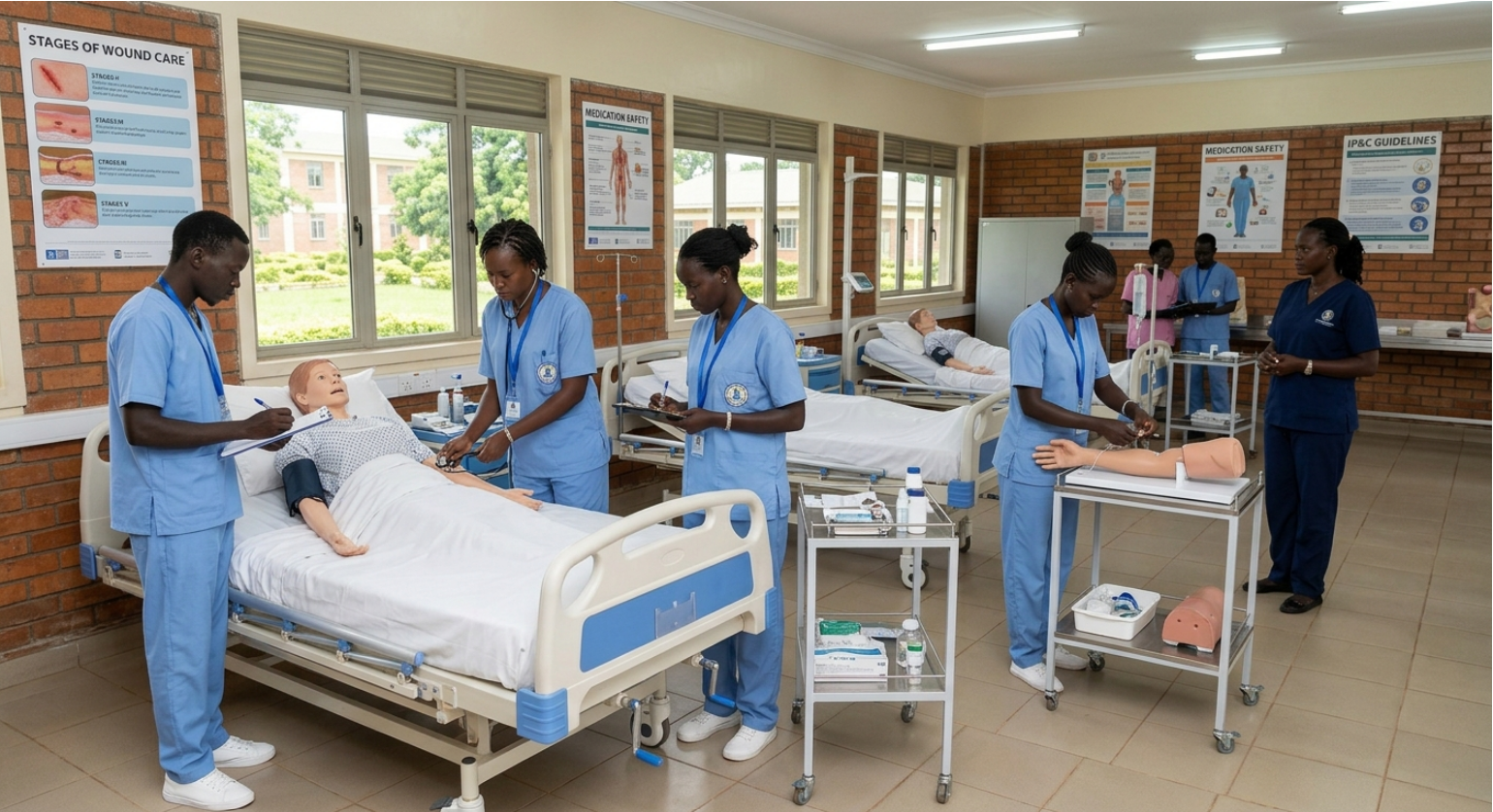
- Practical nursing skills training
- Laboratory and skills-based learning
- Supervised clinical practice
- Community health activities
- Clinical placements in appropriate healthcare facilities
The combination of theoretical and practical education will enable students to progressively develop the competencies required for professional nursing practice.
Areas of Learning
Students will receive training in key areas of nursing and healthcare, including:
- Anatomy and Physiology
- Fundamentals of Nursing
- Medical-Surgical Nursing
- Pharmacology
- Maternal and Newborn Health
- Child Health Nursing
- Community Health Nursing
- Mental Health Nursing
- Nutrition
- Public Health
- Nursing Ethics and Professional Practice
- Health Education
- Research and Evidence-Based Practice
Clinical Training
Practical clinical training will form an important component of the programme. Students will have opportunities to apply classroom knowledge in supervised healthcare settings.
Clinical training will help students develop competencies in patient assessment, nursing procedures, health education, infection prevention and control, communication, documentation, and patient-centred care.
Why Study Nursing at MIHS?
Studying Nursing at MIHS will provide students with:
- On-campus learning
- Practical and skills-based training
- Supervised clinical experience
- Qualified teaching staff
- A structured three-year diploma programme
- Training in both clinical and community health
- A learning environment focused on professional development
How to Apply
- Complete the MIHS application form.
- Submit the required academic and supporting documents.
- Wait for application review and admission confirmation.
- Complete the required registration and fee payment.
- Begin your studies at MIHS.
Eligibility
Applicants must meet the admission requirements of Meridian Institute of Health Sciences (MIHS) and the applicable requirements of the relevant education and health regulatory authorities in South Sudan.
Applicants will be required to submit their academic certificates and other supporting documents requested by MIHS during the admission process.
Applicants are encouraged to contact the MIHS Admissions Office for the current admission requirements before submitting their application.
Career Paths
- Hospitals
- Primary healthcare centres
- Health centres and clinics
- Community health programmes
- Maternal and child health services
- Non-governmental organisations
- Humanitarian health programmes
- Private healthcare facilities
- Public health programmes
Curriculum
Semester 1: Foundations of Nursing & Human Sciences
- Anatomy and Physiology: Basic structure and function of the human body systems.
- Fundamentals of Nursing: Basic principles of patient care, vital signs, hygiene, and core clinical procedures.
- Nutrition: Essential nutrients, dietary principles, and human nutritional requirements across life stages.
- Clinical Training Focus: Basic health assessment, infection prevention and control, and foundational bedside patient care.
Semester 2: Medical-Surgical Nursing & Pharmacology
- Medical-Surgical Nursing: Care and interventions for adult patients with common acute and chronic medical conditions.
- Pharmacology: Fundamentals of drug actions, dosage calculations, side effects, and safe medication administration.
- Clinical Training Focus: Supervised administration of medications, assisting in general medical-surgical wards, and clinical documentation.
Semester 3: Maternal, Newborn & Child Health
- Maternal and Newborn Health: Comprehensive care during pregnancy, labor, delivery, postpartum recovery, and neonatal care.
- Child Health Nursing: Pediatric nursing care, growth monitoring, developmental stages, and common childhood illnesses.
- Clinical Training Focus: Antenatal and postnatal care practicals, infant assessment, immunizations, and pediatric ward rotation.
Semester 4: Community & Public Health Nursing
- Community Health Nursing: Delivery of healthcare services outside hospital settings, focusing on families and community units.
- Public Health: Concepts of disease prevention, epidemiology, sanitation, and health promotion strategies.
- Clinical Training Focus: Community outreach visits, health screening campaigns, and home-based patient assessment.
Semester 5: Mental Health & Patient Education
- Mental Health Nursing: Principles of psychiatric care, mental status assessment, and therapeutic interventions for behavioral disorders.
- Health Education: Communication strategies for teaching health promotion to individuals, families, and communities.
- Clinical Training Focus: Therapeutic communication techniques, psychiatric facility/clinic rotations, and planning and delivering community health talks.
Semester 6: Professional Practice, Ethics & Research
- Nursing Ethics and Professional Practice: Legal frameworks, professional standards, accountability, patient rights, and ethical decision-making.
- Research and Evidence-Based Practice: Basic research methods, data collection, critical appraisal, and integrating evidence into clinical practice.
- Clinical Training Focus: Advanced clinical decision-making, patient-centered care integration, pre-graduation ward leadership, and supervised evidence-based clinical project work.
Fees
Tuition Fee: USD 200 per semester The tuition fee covers the programme's academic instruction. Any additional institutional, examination, practical, clinical, registration, or other applicable fees will be communicated to students during the admission process.